
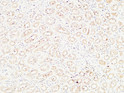
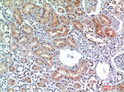
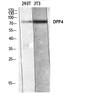


Anti-DPP4 antibody (350-400 aa) (STJ97660)
SPECIFICATIONS
ClonalityPolyclonal
HostRabbit
ConjugationUnconjugated
IsotypeIgG
ImmunogenThe antiserum was produced against synthesized peptide derived from the Internal region of human DPP4 at the amino acid range 350-400
General Information
| Short Description | Rabbit polyclonal anti-Dipeptidyl peptidase 4 (350-400 aa) for use in WB, IHC, IF and ELISA in Human, Rat and Mouse samples. Datasheet included with dilution recommendations, and related reagents. |
| Applications | WB/IHC/IF/ELISA |
| Host | Rabbit |
| Reactivity | Human/Rat/Mouse |
| Note | STRICTLY FOR FURTHER SCIENTIFIC RESEARCH USE ONLY (RUO). MUST NOT TO BE USED IN DIAGNOSTIC OR THERAPEUTIC APPLICATIONS. |
Product Properties
| Clonality | Polyclonal |
| Isotype | IgG |
| Conjugation | Unconjugated |
| Concentration | 1 mg/mL |
| Purification | The antibody was affinity-purified from rabbit antiserum by affinity-chromatography using epitope-specific immunogen. |
| Dilution Range | WB 1:500-1:2000IHC-P 1:100-1:300ELISA 1:10000IF 1:50-200 |
| Formulation | Liquid in PBS containing 50% Glycerol, 0.5% BSA and 0.02% Sodium Azide. |
| Storage Instruction | Store at-20°C for up to 1 year from the date of receipt, and avoid repeat freeze-thaw cycles. |
Target Information
| Gene Symbol | DPP4 |
| Gene ID | 1803 |
| Uniprot ID | DPP4_HUMAN |
| Immunogen | The antiserum was produced against synthesized peptide derived from the Internal region of human DPP4 at the amino acid range 350-400 |
| Immunogen Region | 350-400 aa |
| Specificity | CD26 Polyclonal Antibody detects endogenous levels of CD26 protein. |
Additional Info
| Post Translational Modifications | The soluble form (Dipeptidyl peptidase 4 soluble form also named SDPP) derives from the membrane form (Dipeptidyl peptidase 4 membrane form also named MDPP) by proteolytic processing. N- and O-Glycosylated. Phosphorylated. Mannose 6-phosphate residues in the carbohydrate moiety are necessary for interaction with IGF2R in activated T-cells. Mannose 6-phosphorylation is induced during T-cell activation. |
| Function | Cell surface glycoprotein receptor involved in the costimulatory signal essential for T-cell receptor (TCR)-mediated T-cell activation. Acts as a positive regulator of T-cell coactivation, by binding at least ADA, CAV1, IGF2R, and PTPRC. Its binding to CAV1 and CARD11 induces T-cell proliferation and NF-kappa-B activation in a T-cell receptor/CD3-dependent manner. Its interaction with ADA also regulates lymphocyte-epithelial cell adhesion. In association with FAP is involved in the pericellular proteolysis of the extracellular matrix (ECM), the migration and invasion of endothelial cells into the ECM. May be involved in the promotion of lymphatic endothelial cells adhesion, migration and tube formation. When overexpressed, enhanced cell proliferation, a process inhibited by GPC3. Also acts as a serine exopeptidase with a dipeptidyl peptidase activity that regulates various physiological processes by cleaving peptides in the circulation, including many chemokines, mitogenic growth factors, neuropeptides and peptide hormones such as brain natriuretic peptide 32. Removes N-terminal dipeptides sequentially from polypeptides having unsubstituted N-termini provided that the penultimate residue is proline. (Microbial infection) Acts as a receptor for human coronavirus MERS-CoV-2. |
| Protein Name | Dipeptidyl Peptidase 4AdabpAdenosine Deaminase Complexing Protein 2Adcp-2Dipeptidyl Peptidase IvDpp IvT-Cell Activation Antigen Cd26Tp103Cd Antigen Cd26 Cleaved Into - Dipeptidyl Peptidase 4 Membrane FormDipeptidyl Peptidase Iv Membrane Form - Dipeptidyl Peptidase 4 Soluble FormDipeptidyl Peptidase Iv Soluble Form |
| Database Links | Reactome: R-HSA-381771Reactome: R-HSA-400511 |
| Cellular Localisation | Dipeptidyl Peptidase 4 Soluble Form: SecretedDetected In The Serum And The Seminal FluidCell MembraneSingle-Pass Type Ii Membrane ProteinApical Cell MembraneCell ProjectionInvadopodium MembraneLamellipodium MembraneCell JunctionMembrane RaftTranslocated To The Apical Membrane Through The Concerted Action Of N- And O-Glycans And Its Association With Lipid Microdomains Containing Cholesterol And SphingolipidsRedistributed To Membrane Rafts In T-Cell In An Interleukin-12-Dependent ActivationIts Interaction With Cav1 Is Necessary For Its Translocation To Membrane RaftsColocalized With Ptprc In Membrane RaftsColocalized With Fap In Invadopodia And Lamellipodia Of Migratory Activated Endothelial Cells In Collagenous MatrixColocalized With Fap On Endothelial Cells Of Capillary-Like Microvessels But Not Large Vessels Within Invasive Breast Ductal CarcinomaColocalized With Ada At The Cell Junction In Lymphocyte-Epithelial Cell AdhesionColocalized With Igf2r In Internalized Cytoplasmic Vesicles Adjacent To The Cell Surface |
| Alternative Antibody Names | Anti-Dipeptidyl Peptidase 4 antibodyAnti-Adabp antibodyAnti-Adenosine Deaminase Complexing Protein 2 antibodyAnti-Adcp-2 antibodyAnti-Dipeptidyl Peptidase Iv antibodyAnti-Dpp Iv antibodyAnti-T-Cell Activation Antigen Cd26 antibodyAnti-Tp103 antibodyAnti-Cd Antigen Cd26 Cleaved Into - Dipeptidyl Peptidase 4 Membrane Form antibodyAnti-Dipeptidyl Peptidase Iv Membrane Form - Dipeptidyl Peptidase 4 Soluble Form antibodyAnti-Dipeptidyl Peptidase Iv Soluble Form antibodyAnti-DPP4 antibodyAnti-ADCP2 antibodyAnti-CD26 antibody |
Information sourced from Uniprot.org